- Babies & toddlers
- Teenagers
- Men with beards
- People in hats & glasses
- Uniforms
- Delivery drivers
- Skateboarders
- Joggers
- Umbrellas & backpacks
- Costumes
Why we're different
Our early learning program
A puppy's first weeks shape who they'll be for life. We spend hours with every puppy, using methods based on the work of animal behaviorists and researchers, so yours comes home confident, calm and ready to learn.
Do your homework
Before you buy a puppy from anyone, make sure they run an early learning program. And never buy from a pet store; those puppies come from puppy mills.
Working with puppies from birth builds a deep bond with people, confidence and a love of training. It also lowers the chance that a grown dog ends up in a shelter because of behavior problems.
Our puppies are raised in our home, not a kennel, so they grow up with the everyday sounds and activity of family life. At 49 days, every puppy is temperament tested.
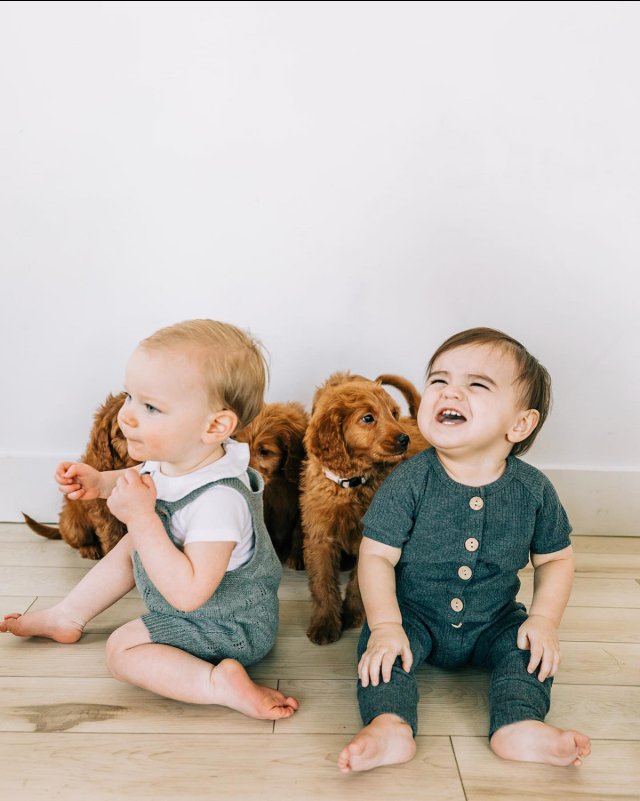
Birth to 3 weeks
The first weeks
Calm pregnancy
Stress in the mother can pass to her puppies, so our moms get a calm home, good food, exercise and lots of petting. Puppies from petted moms tolerate handling better.
Vigor test at birth
We start getting to know each puppy minutes after birth with the Biotinus "vigor for life" test, and track them through every exercise after that.
Neurological stimulation
From day 3, gentle exercises based on Dr. Fox's research and the U.S. Military "Bio-Sensor" program build brain connections and help puppies handle stress better for life.
Handling & touch
Daily handling from day one gets puppies used to being touched everywhere, ready for vet visits, grooming and the occasional tail grab from a toddler.
Scent & texture
Smell and touch work at birth, so we introduce new scents and surfaces in short, structured sessions that build curiosity without overwhelming them.
Bonding with people
We work on human bonding from birth so puppies love people, while building enough independence to avoid separation anxiety later.
3 to 9 weeks
The window of opportunity
Between 3 and 6 weeks, a puppy's anxiety is the lowest it will ever be. Anything they meet during this window is remembered as normal and safe, so we make it count.
Sound conditioning
Vacuums, blenders, thunder, fireworks: we introduce sounds gradually so puppies startle a little and recover fast. Families tell us their dogs shrug off storms.
Enriched environment
Ramps, tunnels, wobble boards and stairs in our puppy play yard build balance, coordination and the confidence to try new things.
Socialization & field trips
Puppies meet kids, adults and steady adult dogs, take car rides and explore new places, always at their own pace with treats and praise.
Potty & crate training
Potty training starts around 3–4 weeks on lots of surfaces, and by 6 weeks they're going outside at least 3 times a day. Crate time is a happy, safe place.
Grooming ready
By go-home day puppies are comfortable with baths, brushing, ear cleaning, teeth brushing and nail trims.
First lessons
Clicker and reward training start early. By 8 weeks puppies are learning sit, down and come, and starting on a leash.
Puppies also spend one-on-one time with us away from the litter. They act differently alone than in a group, and that time helps us know each personality and build confidence.
The puppy brain
Why the first weeks matter so much
Studies show that by 7–8 weeks, puppies learn at nearly an adult level, and learning starts getting harder by about 16 weeks. Mild, positive challenges early on grow a bigger, better-connected brain.
Fear first shows up around 5 weeks and peaks in the fear imprint period around 8–10 weeks. That's why we do so much in the weeks before, while every new experience can still feel safe.
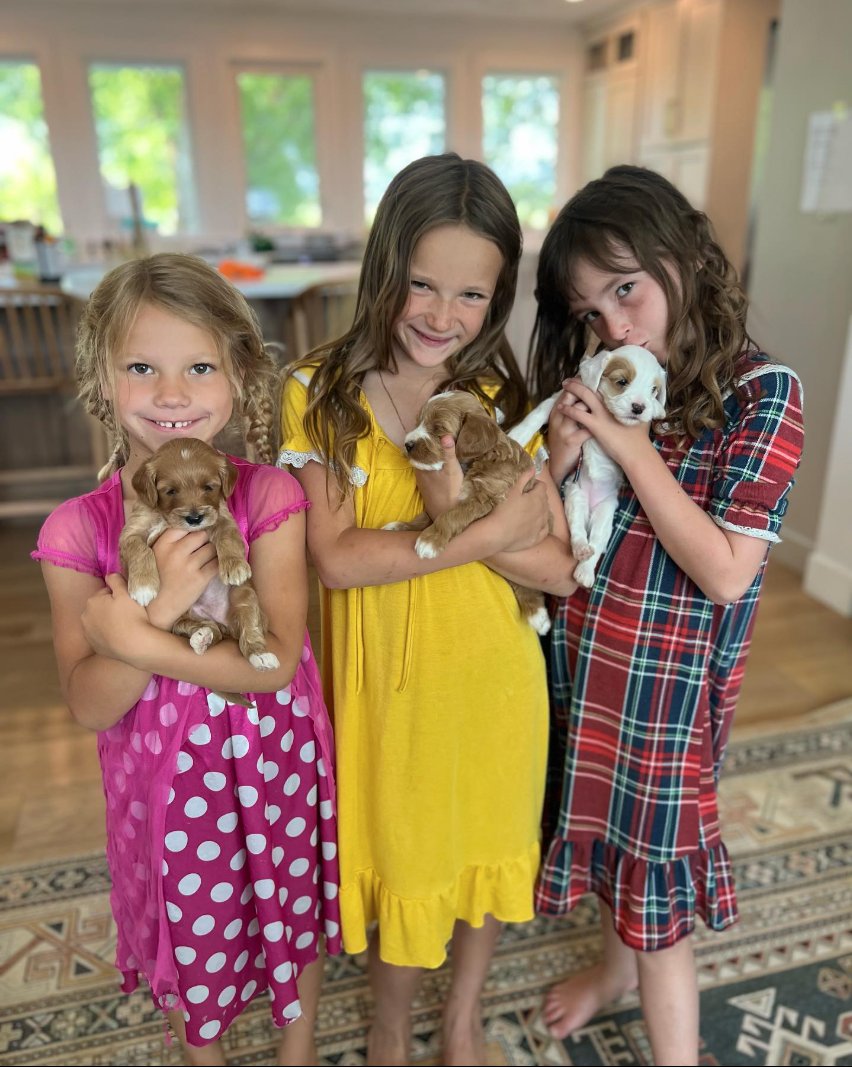
Stages of development
What to expect as your puppy grows
Researchers Scott and Fuller mapped the critical periods of a dog's development in 1953. Here's the short version.
- Birth – 2 weeks
Neonatal
Eyes and ears closed, mostly sleeping and nursing. Short daily handling now speeds development and builds confidence.
- 2 – 3 weeks
Transition
Eyes open, all senses switch on, and puppies go from sheltered to very aware of their world.
- 3 – 7 weeks
Learning to be a dog
Puppies stay with mom and littermates to learn play, bite inhibition and "doggie language."
- 7 – 12 weeks
Learning about people
Puppies go home and should meet as many kinds of people, places and things as possible. Avoid scary experiences during the fear period around 8–10 weeks.
- 12 – 16 weeks
Teething & independence
Many behaviorists believe the socialization window starts closing now, so keep up the outings.
- 4 – 14 months
Testing limits
Expect a "teenager" phase of wandering farther, plus a second fear period where a confident pup may suddenly get cautious. Stay patient and positive.
- 1 – 4 years
Maturity
Keep socializing for life. A tired puppy is a good puppy!
Keep it going at home
Socialization checklist
Socialization is lifelong. Take your puppy somewhere new several times a week, go slowly, use treats, and never force them toward something scary.
People
Animals
- Other puppies
- Calm adult dogs
- Cats
- Horses
- Cows
- Rabbits
- Birds
Sounds
- Vacuum
- Hair dryer
- Smoke alarm
- Sirens
- Thunder
- Fireworks
- Lawnmower
- Blender
- Truck air brakes
- Doorbell & knocking
Places & things
- Vet & groomer
- Car rides
- Pet-friendly stores
- Ball games
- Stairs & elevators
- Bikes & scooters
- Wheelchairs & crutches
- Automatic doors
- Bubbles & balloons
Surfaces
- Grass
- Gravel
- Snow
- Sand
- Slick floors
- Grates
- Bubble wrap
- Mud & puddles
- Piles of leaves
Touch
Handle your puppy from nose to tail every day: ears, paws, toes and mouth. Brush teeth and hair and trim nails often. Your vet and groomer will thank you.